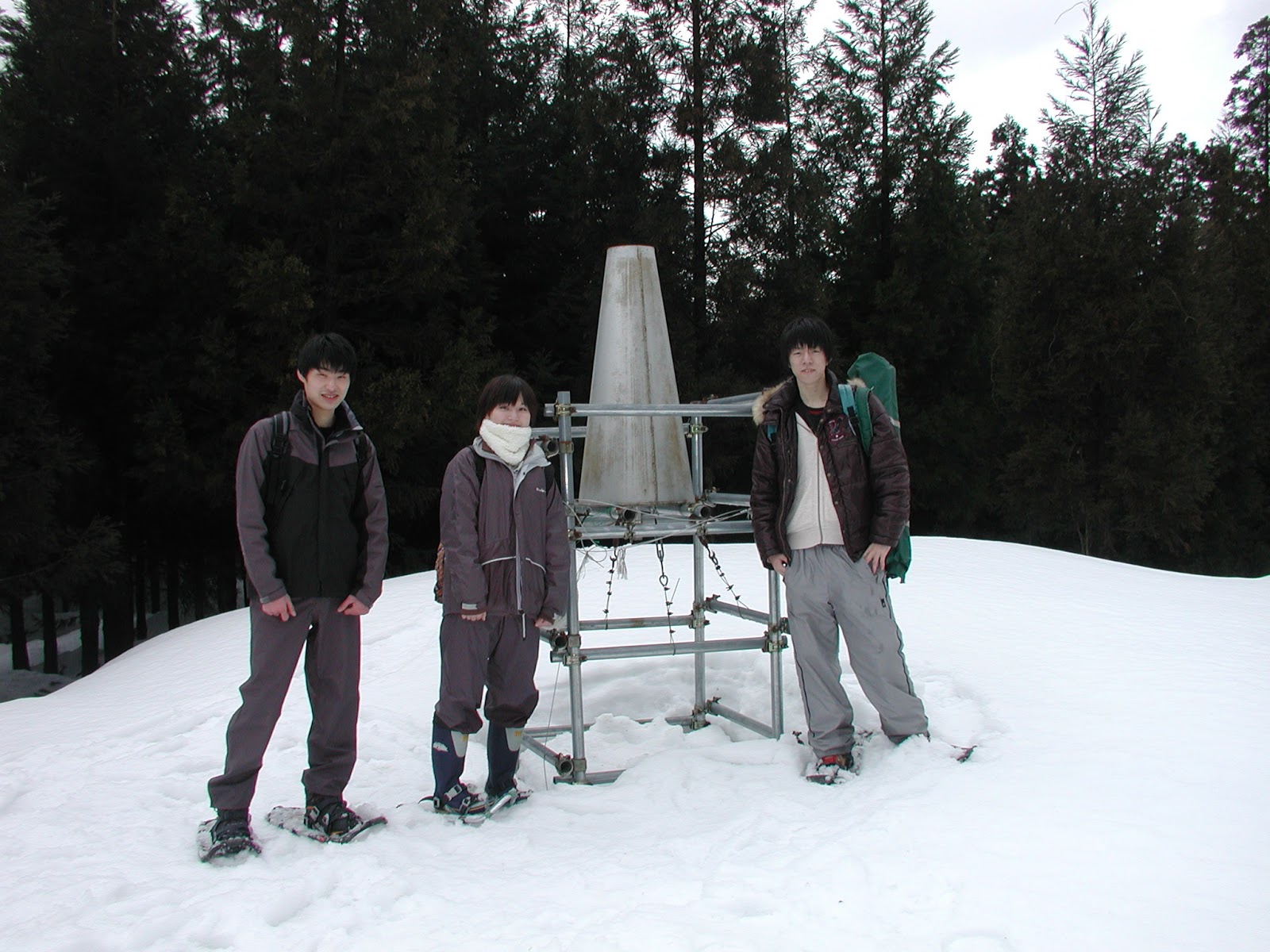
Wednesday, 7 March 2012

Rain-on-snow

Warm temperatures and rain over the past few days swelled the river

Today's team at the tributary precipitation guage

Monday, 13 February 2012

Deep Niigata snows

Typical mid-winter scene at the gauging station (low flow)

Fetching water for our lunch time coffee brew

Climbing up to the tributary site

Tributary site snow survey

Larch lysimeter site

Tributary cedar lysimeter site

Valley bottom cedar lysimeter site

Local village of Nunobe

Wednesday, 25 January 2012

Snow lysimeter troubles

Cover removed from lysimeter bucket to allow cleaning

Another day of sub-zero field work and snow survey difficulties, but we did at least have blue skies and sunshine! First up I had to dig out the lysimeter bucket at the larch site as looking at the logger data it had not moved at all. This is a sure sign of trouble as even during the coldest periods the bucket will tip several times a day due to ground heat melt at the base of the snowpack. I found the trouble - larch needles clogging the bucket intake - and cleaned it all up nicely. Mind you, I had to remove about 70cm of snowpack and get down on my knees to reach it, as it is set well below ground level.

Compared to two weeks ago, barely any new snow had accumulated. This is most rare for January, which along with December generally has the heaviest and most frequent snowfall. The weather can change dramatically over short distances in Japan. While we basked in sunshine all day in Murakami (albeit -3 degrees), the area from Niigata City to the south was getting hit by the biggest snow storm so far this year.

Wednesday, 11 January 2012

Snow survey can be tough

Snow lysimeter at the tributary site (elev. 140m)

Now sometimes snow survey can be a piece of cake. If the snowpack is not frozen hard, if the air temperature is just above freezing, if the sun is even shining, then for sure it can be one of the most pleasant things to be doing on a winter's day. Especially if the snow is quite deep, say around 2 metres, then it can be immensely satisfying taking your sample core of snow and weighing up the amount of water that will be released in the coming spring to irrigate the paddy fields and put your dinner on the table so to speak.

But the trouble with days like today is that with the sub-zero temperatures, your snow core freezes inside the sample tube, and no matter how hard you scrape, shake and prod, you just can't get the sampler clean for the next sample. It's immensely frustrating and can leave you in quite a bad temper. Maritime snowpacks will often contain a little moisture, especially at the base where you have ground heat slowly melting the snow, and it will instantly freeze to the aluminium sampler when you extract your snow core.

Still, my two students persevered and completed the survey as best they could at the tributary site, while I serviced the snow lysimeter and zipped up into the mountains a bit further to change the battery on the logger measuring spring water temperature. We also charged the winter storage gauge at the site, before brewing up hot coffee for lunch using the local stream water - delicious!

Snow survey (larch site): depth 69cm, SWE 20cm, density 0.29.

Wednesday, 21 December 2011

Winter arrives

Stage = 50.5cm, Q = 0.96m3/s

December 16 brought the sudden arrival of winter. The weather changed from mild sunny days to snow. And once the snow arrives it usually continues right through to early April. I was caught out by not having the snow lysimeters fully primed and ready for the arrival of snow. So I was digging out and cleaning the lysimeters while the students made a discharge measurement in rather frigid conditions.

We also did our first snow survey of the season. About 23cm snow depth and 5cm snow water equivalent (SWE) at the larch site giving a snow density (SWE/depth) of about 0.2. We charged the winter precipitation storage gauge with anti-freeze at the paddy field site, but we ran out of time to climb up to the tributary site. That would be our job next time in early January.

Snow survey (larch site): depth 22.8cm, SWE 4.6cm, density 0.20.

Winter storage gauge at the paddy field site

Wednesday, 30 November 2011

Rising baseflows

Stage = 57cm, Ta = 7C, Tw = 10C
From the hydrograph below we can see that the stage has been quite high at 60-70cm during late November due to some steady rains. There are no large peaks, however, as rainfall intensities have been moderate. This has raised the baseflow level as we head into December.

Wednesday, 16 November 2011

Snow lysimeter fixed

Stage = 51.5cm, Ta = 4.6C, Tw = 9.2C


Today's work included measuring discharge for Takiya River and the tributary, then fixing the leak in the drainage pipe at the mature cedar snow lysimeter site. The third lysimeter tray had become disconnected at the elbow, likely when the tray was moved during a flood. We repositioned the tray and reconnected and glued the PVC pipe quite easily.

The first snows of winter have already fallen in Niigata. We could see snow on the mountains down to about 500m elevation. For the high peaks this snow will stay and accumulate right through the winter, but for the lower elevations the snow will come and go through autumn until winter arrives for real.

PVC pipe reconnected and glued at the elbow